DME Station Website Redesign
A research-driven website redesign for a Medicare-funded DME provider, translating usability research into a simplified, accessible information architecture that strengthened patient trust and reduced support burden.

Role
UX Lead
Type of project
Health & Wellness
Tools
Canva, Google Workspace, Good ol' pen and paper
Deliverables
Website
Overview

Challenge
The existing website contained outdated and incomplete information. Patients couldn’t easily tell what equipment was offered and when, what parts of Medicare were accepted, or what steps were required to continue receiving supplies. For patients managing a chronic condition, this uncertainty led to frustration, lapses in care, and an overreliance on customer support for basic questions.
Solution
The solution centered on reducing risk through clarity. I restructured the information architecture to align with how patients think about their care: what do you supply, do I qualify, and what do I do next. The homepage was treated as a decision-support surface rather than a marketing page and the redesign strengthened trust while reducing operational friction.
Goals
From a business perspective:
Reduce avoidable support calls by answering common questions upfront
Set clear expectations around Medicare eligibility and coverage
Improve onboarding efficiency and trust
From a patient perspective:
Quickly understand what equipment is available
Know whether they qualify and what steps to take next
Feel informed and supported while navigating their care
Success was measured by whether users could understand key information faster and with less effort. We defined success around improved comprehension of equipment availability and eligibility, clearer navigation, stronger accessibility and readability, and reduced reliance on customer support for basic informational tasks.
Research
I ran usability testing on the existing website to understand where patients were getting stuck and why. The research showed that most information was technically present, but poorly organized. Users struggled to form a complete picture of what the company offered or whether they qualified, largely due to unclear hierarchy and discoverability.
Without changes, these breakdowns would continue to cause confusion, missed steps, and unnecessary strain on support teams.
Competitive Perspective
I reviewed comparable DME and healthcare websites to understand how similar companies reduced uncertainty for patients. The strongest examples surfaced trust signals early such as accepted insurance types, accreditation, testimonials, and clear process explanations. Contact information was consistently easy to find, and footers were treated as structured navigation tools rather than an afterthought.
Patient Understanding
Design Basics
Navigation
Next Steps
Design Direction
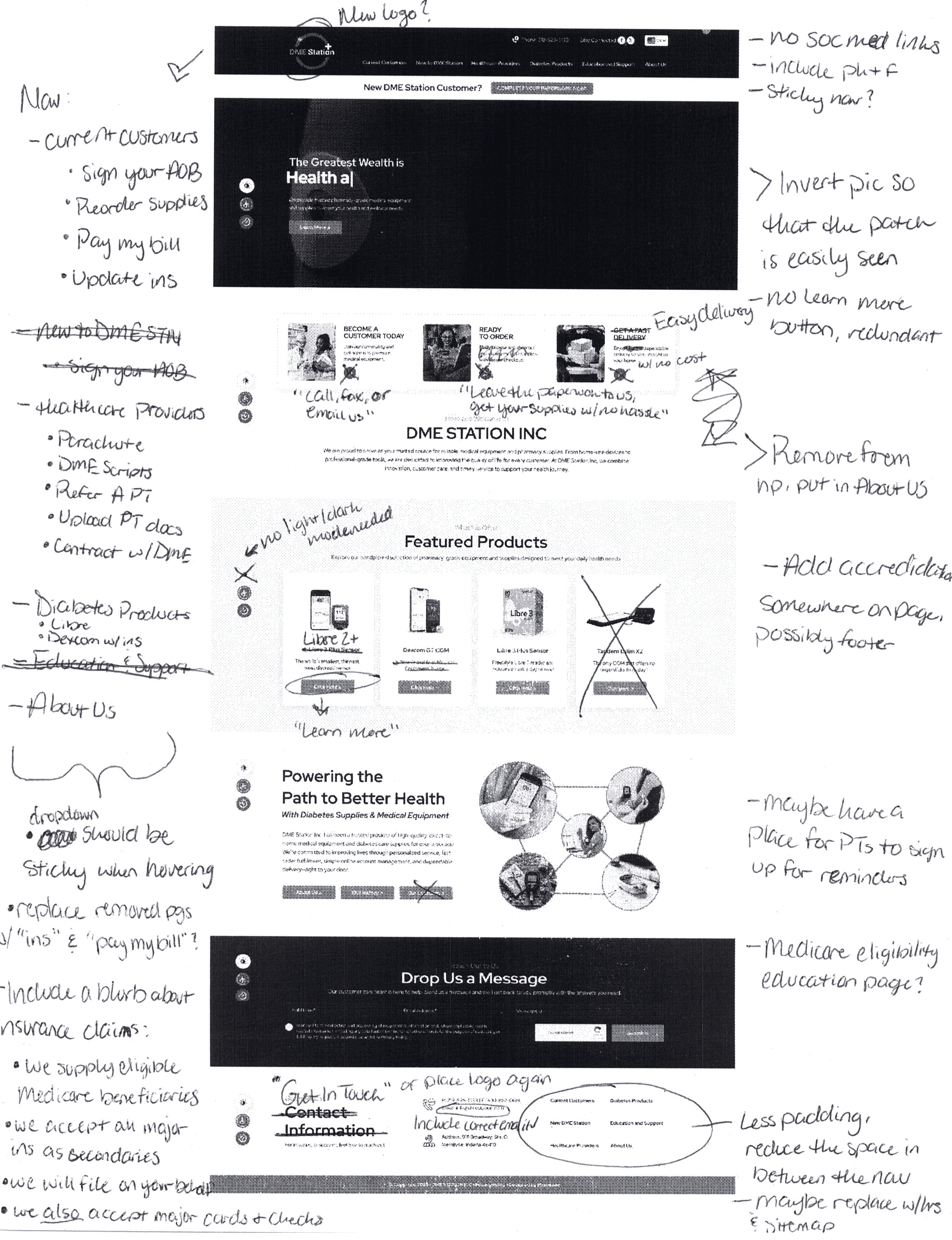
The redesign focused on simplifying the homepage, restructuring information architecture around patient mental models, and making pertinent information visible early in the experience.
Collaboration & Leadership
I led the UX strategy end-to-end and worked closely with a secondary design team during execution. I translated research findings into clear direction through annotated iterations, IA documentation, and regular critiques grounded in usability evidence. This kept the team aligned and reduced subjective decision-making.
Outcome
Although the company closed before post-launch analytics could be collected, usability testing confirmed that the redesign clarified user pathways, reduced ambiguity around eligibility and equipment access, and aligned the organization around a more patient-first digital experience.
Reflection
This project reflects how I approach senior UX work: staying close to real problems, identifying risk early, defining success before design begins, and using research to guide teams and decisions, especially in regulated environments where clarity directly affects real people.